Summary
Entry to Diocletian's Palace grounds is free. The cathedral alone costs €6 and the cellars €6; a ticket for all five cathedral sites costs €16, or €19 with the guide app (November 2026). The five cathedral sites are the cathedral, the crypt, the baptistery (the former Temple of Jupiter), the treasury and the bell tower. They are sold at the cathedral ticket desk on the Peristyle, one by one for €4 to €8 or in six combined tickets from €10. The cellars are run separately by the Split City Museum and have their own ticket. A guided walk with VR reconstructions, Time Walk's Diocletian's Palace walking tour, costs €25 for 80 minutes with a licensed local guide; it does not include the interior tickets. Below: every price, which combined ticket to choose, where to buy and how to save.
Ticket Prices at a Glance (November 2026)
The five cathedral sites are sold at the cathedral ticket desk on the Peristyle, one by one or as a colour-coded combined ticket. The cellars belong to the Split City Museum and are always a separate ticket.
| Site | Price |
|---|---|
| Cathedral of Saint Domnius | €6 |
| Crypt | €4 |
| Baptistery (Temple of Jupiter) | €4 |
| Treasury | €6 |
| Bell tower | €8 |
| Guide app | €5 |
| Cellars, developed halls (Split City Museum, own ticket) | €6 |
| Ticket | Includes | Price | Singly |
|---|---|---|---|
| Blue | Cathedral, crypt, baptistery | €10 | €14 |
| Red | Cathedral, treasury, crypt, baptistery | €11 | €20 |
| Green | Cathedral, bell tower, treasury | €13 | €20 |
| Yellow | Cathedral, bell tower, treasury, baptistery | €14 | €24 |
| Purple | All 5 sites | €16 | €28 |
| Gold | All 5 sites + guide app | €19 | €33 |
Source: price board at the cathedral ticket desk, November 2026. Cellars price checked by Time Walk in the same month. "Singly" is what the same sites cost bought one by one. Children, students and groups often pay less, so ask at the desk.
Quick Facts: What Is Free and What Needs a Ticket
Free entry to the palace:
- Walk through all four Roman gates (Golden, Silver, Iron, Brass): free, 24 hours a day
- Peristyle central courtyard: free
- Vestibule domed anteroom: free
- Cathedral exterior: free
- Main corridor of subterranean cellars (undeveloped): free
- Temple of Jupiter exterior: free
- All streets and public areas inside the palace walls: free
Everything else in the tables above needs a ticket: the five cathedral sites and the developed cellar halls.
Do You Actually Need a Ticket to Enter Diocletian's Palace?
No. This is the single most common misunderstanding about visiting Diocletian's Palace, and it is worth being direct about.
Diocletian's Palace is not a museum with a gate. It is a public, inhabited neighbourhood, the historic centre of the city of Split, where approximately 3,000 people live inside 1,700-year-old Roman walls. The palace has four gates (Golden, Silver, Iron, Brass) and they are open 24 hours a day, every day of the year. There is no ticket booth, no security check, and no admission fee to walk into the palace.
You can walk in at 3:00 AM in January or 10:00 AM in July, and no one will ask for a ticket, because there is no ticket to ask for.
What you pay for are specific interior sights inside the palace walls. Five belong to the cathedral and are sold at the cathedral ticket desk, singly or in combined tickets; the cellars belong to the Split City Museum and have their own ticket:
- The interior of the Cathedral of Saint Domnius (Diocletian's original mausoleum, converted to a Christian cathedral)
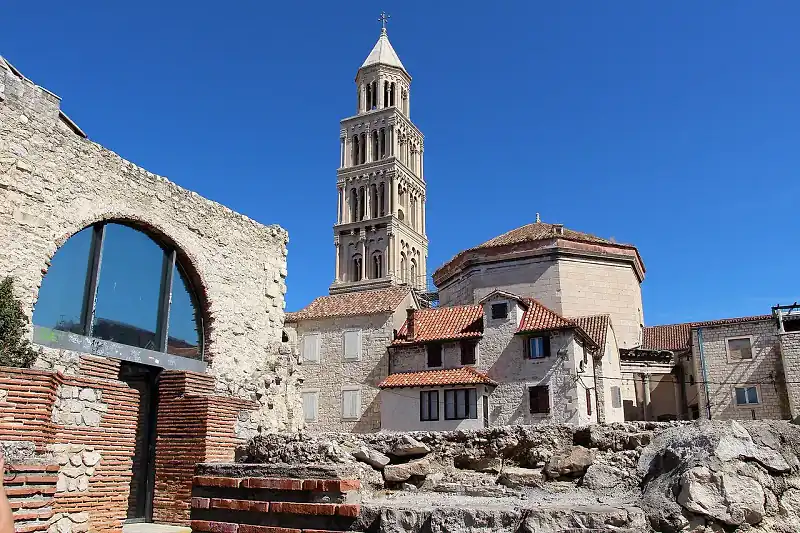
- The bell tower climb (13th-century tower next to the cathedral)
- The developed exhibition sections of the subterranean cellars
- The Temple of Jupiter, now the baptistery
- The crypt beneath the cathedral and the cathedral treasury
The rest of the palace (the streets, the Peristyle, the gates, the Vestibule, the exterior of the cathedral, the outdoor cellar corridor, and all the medieval architecture) is free public space.
For the full context of why the palace is inhabited rather than fenced off as an archaeological site, see our history of Diocletian's Palace.
The Paid Sights in Detail
Prices are from the price board at the cathedral ticket desk in November 2026, and the cellars price is from the same month. Each sight has its own opening hours.
Cathedral of Saint Domnius interior: €6
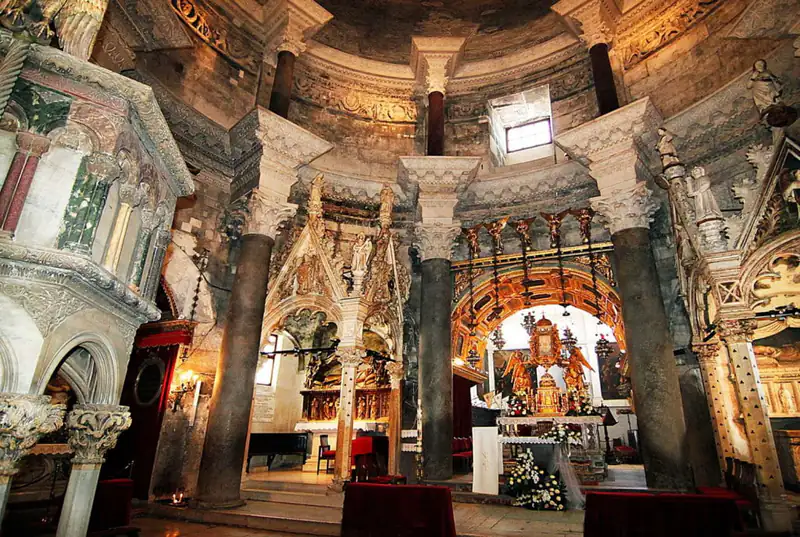
What the ticket includes: Entry to the interior of the octagonal cathedral (originally Emperor Diocletian's mausoleum, converted to a Christian cathedral dedicated to Saint Domnius in the medieval period).
What you see inside:
- The 3rd-century Roman frieze running around the dome drum, which contains the only surviving contemporary portraits of Diocletian and his wife Prisca in the world
- The 1214 carved wooden doors by Croatian master Andrija Buvina, one of the finest pieces of medieval Croatian art
- The Baroque altar of Saint Domnius, the bishop martyred during Diocletian's Christian persecution in 304 AD
- The interior architecture of the original Roman imperial mausoleum
Practical notes:
- Modest dress required (covered shoulders and knees)
- No photography inside the cathedral
- Duration: 20–30 minutes for a proper visit
- Best time: 9:30 AM (before tour groups arrive)
- Queues can reach 20–30 minutes in July–August midday
Is it worth it? For most first-time visitors, yes. The Buvina doors and the Roman frieze with Diocletian's portraits are objects that cannot be seen elsewhere in the world.
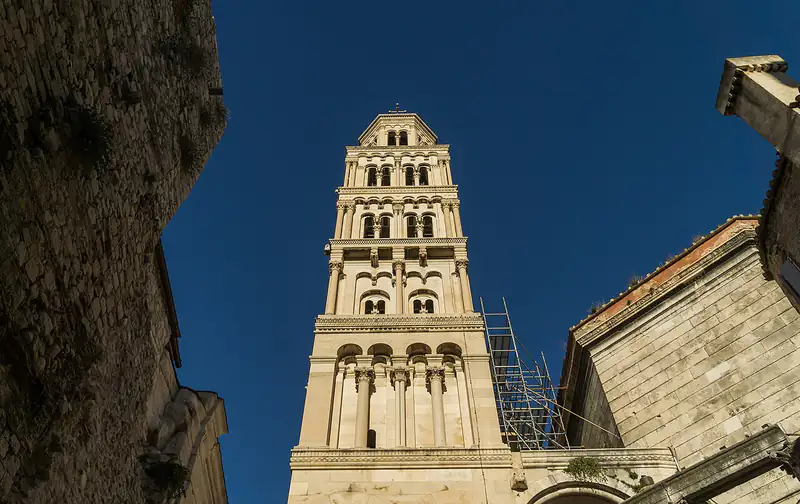
Bell tower climb: €8
What the ticket includes: Access to climb the 13th-century Romanesque bell tower next to the cathedral.
What you see:
- 183 stone and metal steps to the top
- Panoramic 360° views of Split, the palace, the Adriatic, and the surrounding islands
- Views of the palace's Roman geometry from above (impossible to grasp from ground level)
- On clear days: Brač, Šolta, and often Hvar visible to the south
Practical notes:
- The climb is steep, partly open-air, and involves narrow passages
- Not recommended for those with significant fear of heights, mobility limitations, or claustrophobia
- Duration: 30–45 minutes including queueing and climb
- Best time: Early morning for short queues; sunset for atmospheric light
- Queues can reach 30–45 minutes in July–August midday
Is it worth it? The views are objectively among the best in Split, and the perspective on the Roman palace layout from above genuinely helps understanding. Yes, if you're physically able and have the time to queue.
Subterranean cellars (developed sections): €6
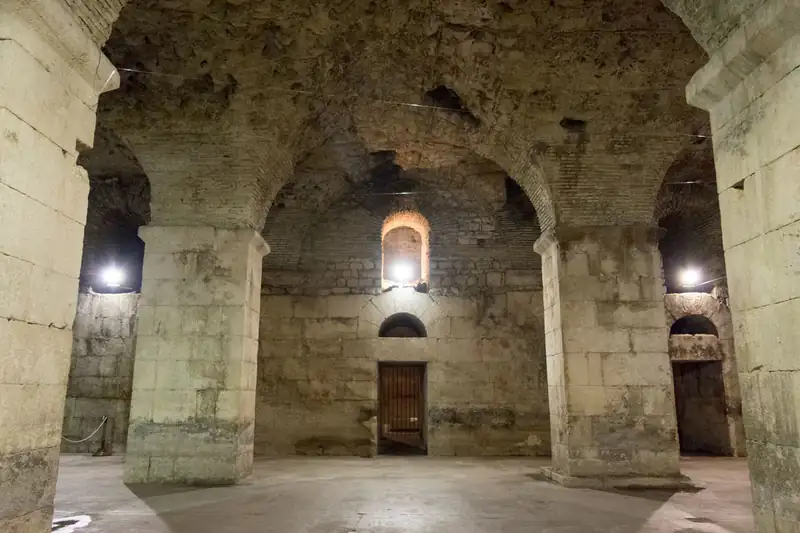
What the ticket includes: Access to the fully developed and lit exhibition sections of the vaulted Roman storage cellars beneath the southern half of the palace. Note: the main central corridor (which contains souvenir stalls) is free. The ticket is for the excavated exhibition rooms that extend from it. The cellars are run by the Split City Museum, so this ticket is sold at the cellars and is not part of the cathedral's combined tickets.
What you see:
- Original Roman vaulted architecture in near-perfect preservation
- The floor plan of Diocletian's imperial apartments preserved in negative
- Atmospheric lit spaces that supported the palace above
- Game of Thrones filming locations (the dungeon where Daenerys chains her dragons)
Practical notes:
- Cool temperature (~18°C) year-round even in July
- Bring a light layer if you're heat-sensitive
- Duration: 30–45 minutes
- Best time: Midday in summer (natural air conditioning)
- Rarely has queues even in peak season
Is it worth it? For visitors interested in Roman architecture or Game of Thrones, yes. The cellars are among the best-preserved Roman spaces of their kind in Europe. Skippable if you have very limited time and are prioritising other attractions.
Temple of Jupiter (baptistery): €4
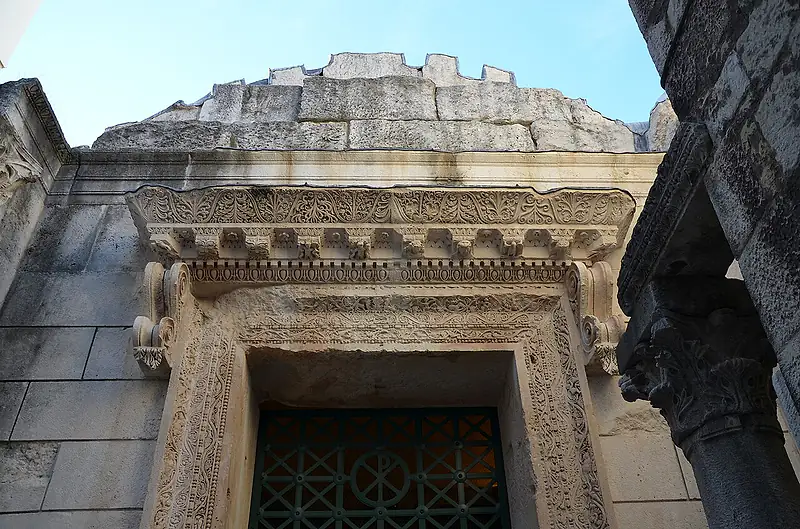
What the ticket includes: Entry to the Temple of Jupiter, the best-preserved Roman temple in the palace complex. On the price board it is listed as the Baptistery, because the temple became the cathedral's baptistery in the Middle Ages.
What you see:
- Original 4th-century Roman temple architecture with intact carved barrel-vaulted ceiling
- 12th-century baptismal font by Croatian master Radovan (one of the finest medieval Croatian sculptures)
- Sculpture of Saint John the Baptist by Ivan Meštrović (20th-century Croatian master)
- The small but architecturally complete original Roman religious space
Practical notes:
- Small space; visits are typically shorter
- Duration: 15–25 minutes
- Best time: Any time; rarely crowded
- Located in a narrow alley west of the Peristyle, easy to miss if you don't know it's there
Is it worth it? Yes. At €4 it shares the lowest price with the crypt, it is quick, and the carved ceiling alone is worth the visit. Most visitors who skip it later say they wish they had gone.
Crypt: €4
What the ticket includes: Entry to the crypt beneath the cathedral, the lower chamber of Diocletian's mausoleum, later used as a chapel dedicated to Saint Lucy. It is a short visit of 10 to 15 minutes.
Treasury: €6
What the ticket includes: The cathedral treasury, a small collection of church silver, reliquaries, vestments and old manuscripts gathered over many centuries. Allow 15 to 20 minutes.
Combined Tickets
The cathedral ticket desk on the Peristyle sells six colour-coded combined tickets (see the table at the top of this guide). They cover only the five cathedral sites; the cellars are always a separate ticket.
- Blue, €10: cathedral, crypt and Temple of Jupiter. The cheapest way in if you skip the bell tower.
- Red, €11: cathedral, treasury, crypt and Temple of Jupiter. The treasury for only €1 more than Blue.
- Green, €13: cathedral, bell tower and treasury. Cheaper than the cathedral and the bell tower bought separately (€14).
- Yellow, €14: cathedral, bell tower, treasury and Temple of Jupiter.
- Purple, €16: all five sites, €12 less than buying them one by one (€28).
- Gold, €19: all five sites plus the guide app (€5 on its own).
Which one to buy: if you want the cathedral and the bell tower, Green (€13) already beats the two single tickets (€14), Yellow adds the Temple of Jupiter for €1 more, and Purple adds the crypt for €2 more again. Without the bell tower, Blue (€10) or Red (€11) is the best value. For just one site, a single ticket is cheapest.
What combined tickets do not include
- The subterranean cellars (run by the Split City Museum, tickets bought at the cellar entrance, €6)
- Any guided tours or VR experiences
Tickets or a guided tour?
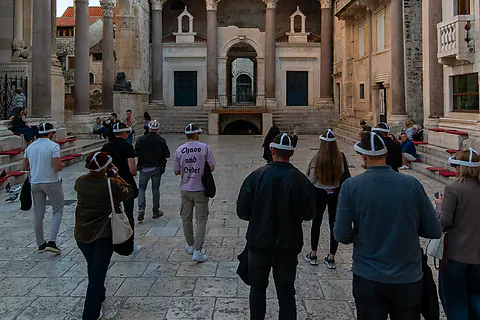
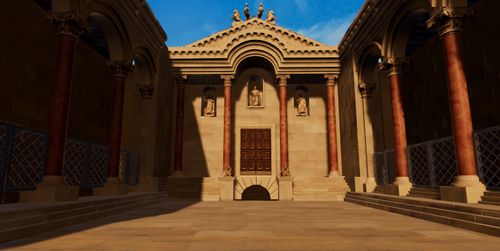
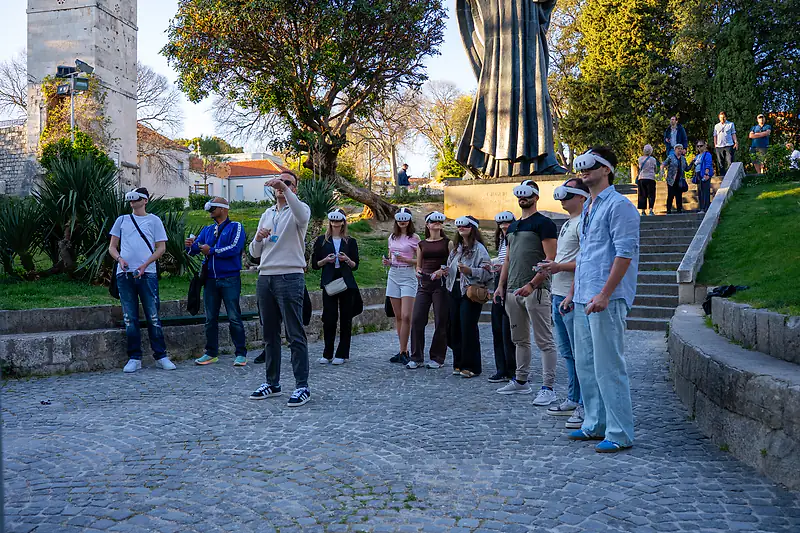
Interior tickets and a guided walk do different jobs. The tickets let you into specific rooms. Time Walk's Diocletian's Palace walking tour (€25, 80 minutes, interior tickets not included) gives you something else: a licensed local guide who explains what you're looking at, a small group, and VR reconstructions that show the palace as historians believe it looked in 305 AD, rather than access to interior spaces without context.
If you have half a day, a good plan is the tour first and one or two interiors afterwards, when you know what you are looking at.
How to Buy Tickets
At the attraction ticket window (most common)
The straightforward method. Each attraction has its own ticket window at or near the entrance:
- Cathedral, crypt, treasury, bell tower and Temple of Jupiter: the cathedral ticket desk on the Peristyle, where the price board lists every single and combined ticket
- Cellars (developed sections): Ticket window inside the cellars, near the paid section entrance
- Temple of Jupiter: Ticket window at the temple entrance in the narrow alley west of the Peristyle
Pros: No booking fees, direct interaction with staff who can explain current combined ticket availability, no advance planning needed
Cons: Queues in July–August midday, especially at the cathedral
Online (limited availability)
The Cathedral of Saint Domnius sells some tickets through its official website. Availability varies. Online booking is not always practical because most visitors decide on the day.
Third-party platforms (GetYourGuide, Viator) sometimes list Diocletian's Palace attraction tickets, but these are typically re-sold with a small markup. If you're already using a platform for other bookings, the convenience may be worth the markup; otherwise, buying at the ticket window on the day is usually cheaper.
As part of a guided tour
Some Split walking tours include one or more paid palace attractions in the tour price. Time Walk does NOT include cathedral, bell tower, or Temple of Jupiter interior tickets. The tour focuses on the outdoor palace and VR reconstructions, so visitors who want the interior sites add those separately. Verify carefully what any guided tour includes before booking.
Combined with a cruise excursion
Cruise ship excursion packages usually include ticket costs bundled into the total price. Independent cruise visitors who prefer to explore on their own can buy individual tickets at the palace directly, usually cheaper than the cruise ship excursion equivalent. For detailed cruise stop planning, see our cruise stop in Split guide.
Individual Tickets vs Combined Tickets vs Guided Tour: Full Value Comparison
Here is the full breakdown to help decide which route makes sense for your specific visit.
Option A: Free walk only
Cost: €0
Time needed: 60–90 minutes
What you get: Palace streets, Peristyle, gates, Vestibule, cathedral exterior, main cellar corridor, atmosphere
What you miss: All interior spaces, the Roman frieze with Diocletian's portraits, the Buvina doors, the bell tower views, the developed cellars, the Temple of Jupiter interior, historical context
Best for: Very short stops (under 90 minutes), extremely tight budgets, visitors who prioritise atmospheric wandering over historical depth
Option B: One or two paid attractions
Cost: €4 to €14
Time needed: 2–3 hours
What you get: Free areas plus your chosen interior(s)
Best combinations:
- Cathedral only (€6): The Roman frieze, Buvina doors, mausoleum interior, for religious/architectural interest
- Bell tower only (€8): Views of Split and the palace from above, for photographers and panorama enthusiasts
- Temple of Jupiter (€4): One of the two cheapest, quick, architecturally complete, good for time-limited visitors
- Cellars (€6): For Game of Thrones fans or those interested in Roman vaulted architecture
Best for: Visitors who know what they want, on a moderate budget, without needing everything
Option C: Every paid sight
Cost: €22 (Purple ticket €16 plus the cellars €6), or €34 bought one by one
Time needed: 4–6 hours
What you get: Every interior space open to the public, all six ticketed sights
What you miss: Historical context (attractions have minimal signage), the ability to understand what you're looking at without prior research
Best for: Committed cultural visitors who plan to spend most of a day in the palace and are willing to read/research independently
Option D: Guided VR walking tour + selected attractions
Cost: €25 (Time Walk) plus any interior tickets you add
Time needed: 2 hours (tour only) or 4–6 hours (tour plus attractions)
What you get: Licensed local guide, Meta Quest 3 VR reconstructions of the palace in 305 AD at Golden Gate and Peristyle, guided walking narrative through the palace, plus optional interior attractions
Best for: First-time visitors who want to understand what they're seeing rather than just see it, visitors who value context over quantity
The honest recommendation
For visitors with 2–4 hours in the palace, Option D (Time Walk at €25) offers the most historical context for the money. For visitors with a full day, Option D plus selected Tier 2 attractions (particularly cathedral and bell tower) gives the most complete experience: the guided tour provides context and reconstruction, and the paid interiors provide the specific artworks and views that the tour doesn't include.
For a deeper comparison of what to see once you're inside the palace, see our best things to do in Diocletian's Palace guide.
Discounts and Special Rates
Children
- Young children: often free; the age limit differs between sites, so ask at each desk
- Older children and teenagers: reduced tickets are usually available
- Students with valid ID (up to 26): Reduced rate, similar to child rate
Seniors
Some sights offer reduced tickets for seniors. Ask at the ticket window and bring proof of age.
Groups
Group rates are often available at the paid sights. Groups are usually arranged in advance directly with the cathedral or through licensed tour operators.
Family tickets
Some attractions offer family combos (2 adults + 2 children). Availability and savings vary; ask at the ticket window.
Free days
- Some Croatian national holidays may include free entry at municipal cultural sites; check locally around Croatian holidays
- Sveti Dujam (May 7): Split's patron saint day; cathedral hours and access may vary due to religious observances
What is NOT typically discounted
- Guided tours (like Time Walk) usually maintain their standard pricing across all seasons and visitor categories
Cruise Visitor Ticket Strategy
Cruise visitors face specific ticketing challenges: limited time (typically 4–8 hours in port), often arriving mid-morning when queues are longest, and needing to prioritise carefully.
Recommended cruise ticket strategy
4-hour port stops (very short):
- Focus on free areas + one high-value paid attraction
- Best paid: Temple of Jupiter (€4, 15 to 25 min) or the cathedral (€6, 30 min)
- Skip bell tower (queue eats time budget)
- Total spent: €4 to €6
6-hour port stops (typical):
- Free areas + 2–3 paid attractions OR guided tour
- Best value: Time Walk (our own tour, €25, 80 min) covers palace tour + VR + guide, leaving time for additional interior visits
- Or: the Yellow combined ticket (€14: cathedral, bell tower, treasury and Temple of Jupiter)
8+ hour port stops (long):
- Guided tour + all paid attractions comfortably fits
- Time Walk (€25) plus the Purple ticket (€16) and the cellars (€6): €47 for the complete experience
What to skip
- Ship-sponsored palace tours are usually much more expensive than doing it yourself
- Very long queues at midday: better to buy Temple of Jupiter or cellar tickets first (rarely queued) while cathedral queue moves
For detailed cruise-specific hour-by-hour planning, see our cruise stop in Split guide.
When Ticket Prices Change
Seasonal variations
The prices in this guide were on the price board at the cathedral ticket desk in November 2026. Opening hours change with the season more than prices do:
- High season (June to September): longest opening hours and longest queues
- Shoulder season (April, May, October): shorter queues
- Low season (November to March): some sights shorten their hours or close on certain days
Long-term trends
Ticket prices tend to rise over the years. If you read this long after November 2026, check the board at the desk before you pay.
Public holidays and religious observances
- Sveti Dujam (May 7): Split's patron saint day; cathedral schedule adjusted for religious ceremonies
- Easter period: Cathedral hours may vary
- Christmas/New Year: Reduced winter hours
How to Save Money on Palace Tickets
Honest advice from years of guiding visitors:
1. Buy a combined ticket at the cathedral desk. The cathedral and the bell tower cost €14 bought separately; the Green ticket gives you both plus the treasury for €13. If you want three or more cathedral sites, the Purple ticket (€16, all five) is usually the best deal.
2. Start with the best-value sights. The Temple of Jupiter and the crypt are the cheapest paid sights at €4 each, and the temple is well worth it; the cellars (€6) come next. Choose the cathedral and the bell tower if their interiors or the view matter to you.
3. Skip attractions you don't care about. Don't buy tickets to sites that don't match your interests. Every visitor is different; not every attraction is right for every visitor. Read the "what you see" sections above to decide.
4. Consider guided tour vs individual tickets math. Time Walk at €25 covers palace walking + VR + licensed local guide. Tickets and a tour do different jobs: the tour adds a licensed guide and the VR reconstruction, the tickets add the interiors.
5. Free walking areas offer genuine value. The palace streets, Peristyle, Vestibule, gates, cathedral exterior, and main cellar corridor are all free. Visitors on strict budgets can genuinely experience the palace without paying anything. It's not the fullest experience, but it's a real one.
6. Avoid ship-sponsored palace tours. Cruise ship excursion packages usually cost much more than doing it yourself. Almost always cheaper to explore independently.
7. Ask for family or student discounts if applicable. Don't assume you'll be offered them automatically. Ask at the ticket window.
8. Check for legitimate free entry days. Occasionally Croatian cultural sites offer free entry on national holidays or during Museum Night (usually late January). Verify with local sources if planning around these dates.
Common Mistakes People Make Buying Tickets
Mistake 1: Assuming you need a ticket to enter the palace itself.
You don't. The palace is free. Only interior attractions have tickets.
Mistake 2: Buying single tickets for several cathedral sites.
With the cathedral and any other cathedral site, a combined ticket is never more expensive than single tickets, and it usually adds sites for free: the cathedral and the bell tower cost €14 one by one, while the Green ticket (€13) adds the treasury. Look at the colour-coded tickets on the price board before you pay.
Mistake 3: Buying tickets to attractions you don't have time to visit.
Cruise visitors particularly do this: they buy combined tickets to feel like they're getting value, then don't have time to see everything. Buy only what you'll actually visit.
Mistake 4: Confusing the free cellar corridor with the paid exhibition.
The main cellar corridor (souvenir stalls, easy to walk through) is free. The developed exhibition rooms extending from it need a ticket. Some visitors pay for the ticket then walk through only the free part, or vice versa. Ask at the paid entrance if you're unsure what you're paying for.
Mistake 5: Booking cruise ship palace tours.
Almost always significantly more expensive than independent visits. Even a licensed guided tour like Time Walk at €25 is a fraction of what cruise ship packages charge.
Mistake 6: Skipping the Temple of Jupiter because "it's small."
It takes about 20 minutes, costs €4 and is one of the best-value paid sights in the palace. The carved barrel-vaulted ceiling is one of the finest surviving Roman temple interiors in the region. Don't skip it.
Mistake 7: Trusting old prices online.
Many websites still quote older prices. The prices in this guide are from the price board in November 2026; if you visit much later, check the board at the desk.
Frequently Asked Questions
Do you need to buy a ticket to enter Diocletian's Palace?
No. Diocletian's Palace itself is free to enter. It is a public, inhabited city centre with four Roman gates open 24 hours a day, every day of the year. You only pay if you want to enter specific interior attractions inside the palace walls: the cathedral interior, the bell tower climb, the developed subterranean cellar exhibitions, or the Temple of Jupiter.
How much do Diocletian's Palace tickets cost in 2026?
The palace itself is free. At the cathedral ticket desk (November 2026) single tickets cost €6 for the cathedral, €4 for the crypt, €4 for the baptistery (Temple of Jupiter), €6 for the treasury and €8 for the bell tower; one ticket for all five costs €16, or €19 with the guide app. The cellars, run by the Split City Museum, cost €6. A guided VR walking tour with Time Walk costs €25 for 80 minutes with a licensed local guide; interior tickets are extra.
What is the cheapest attraction ticket in Diocletian's Palace?
The Temple of Jupiter (sold as the Baptistery) and the crypt are the cheapest paid sights in Diocletian's Palace at €4 each, and the temple is one of the best value. It contains the original 4th-century Roman temple architecture including an intact carved barrel-vaulted ceiling, the 12th-century Radovan baptismal font, and a sculpture by Ivan Meštrović. Most visitors who skip it later regret doing so.
Are there combined tickets for Diocletian's Palace attractions?
Yes. The cathedral ticket desk on the Peristyle sells six combined tickets: Blue €10 (cathedral, crypt, baptistery), Red €11 (adds the treasury), Green €13 (cathedral, bell tower, treasury), Yellow €14 (cathedral, bell tower, treasury, baptistery), Purple €16 (all five sites) and Gold €19 (all five plus the guide app). They do not include the cellars, which the Split City Museum runs separately (€6). Prices from the price board, November 2026.
Where do I buy Diocletian's Palace tickets?
Tickets for the five cathedral sites (cathedral, crypt, Temple of Jupiter, treasury and bell tower), single or combined, are sold at the cathedral ticket desk on the Peristyle; the Temple of Jupiter also has a ticket window at its entrance in the alley west of the Peristyle. Cellar tickets are sold at the cellars entrance. No advance booking is required. Cards accepted at most attractions; small cash useful.
Is the Cathedral of Saint Domnius worth the €6 ticket?
Yes. The Cathedral of Saint Domnius interior contains the only surviving contemporary portrait of Emperor Diocletian and his wife Prisca in the world (on the 3rd-century Roman frieze around the dome), the 1214 Buvina wooden doors (one of the finest pieces of medieval Croatian art), and the interior of Diocletian's original mausoleum. For most first-time visitors interested in the historical and artistic content of the palace, the ticket is worth it for objects that cannot be seen elsewhere.
Is the bell tower worth climbing?
Yes, the bell tower offers panoramic 360° views of Split, the palace's Roman geometry from above, the Adriatic Sea, and the surrounding islands. The €8 climb involves 183 steep steps and is not recommended for visitors with significant fear of heights or mobility limitations. For everyone else, the views are objectively among the best in Split.
How much does a guided tour of Diocletian's Palace cost?
A licensed guided VR-enhanced walking tour with Time Walk costs €25 for 80 minutes and includes a licensed local guide, Meta Quest 3 VR reconstructions at the Golden Gate and Peristyle, and a walking tour of the palace. Non-VR licensed walking tours from other operators typically range €15–30. Free walking tours exist but are tip-based and usually run in large groups, which makes them significantly less effective in the narrow palace streets than paid small-group tours.
Are there discounts for children at Diocletian's Palace?
Yes. Reduced tickets for children are usually available, and young children often go free; the age limits differ between sites, so ask at each desk. Family combined tickets (2 adults + 2 children) are sometimes available. Verify at the ticket window with proof of age.
Are there student discounts?
Yes, students with valid student ID (typically up to age 26) receive reduced rates at most paid attractions.
Do you need to book Diocletian's Palace tickets in advance?
No, tickets are sold at the attraction ticket windows on the day of visit. No advance booking is required or particularly beneficial. Queues can reach 20–45 minutes at the cathedral and bell tower in July–August midday, but no advance booking system reliably eliminates queueing.
Can I buy Diocletian's Palace tickets online?
Some tickets are available through the Cathedral of Saint Domnius official website and through third-party platforms like GetYourGuide and Viator, though on-the-day purchase at the ticket window is usually simpler and cheaper. Third-party platforms typically add a small markup for booking convenience.
What's the best value ticket at Diocletian's Palace?
For pure value, the Temple of Jupiter is usually the best paid sight: Roman temple architecture, Radovan baptismal font, and Meštrović sculpture in one small space. For overall best value including historical context, a licensed guided tour with VR reconstructions like Time Walk (our own tour) at €25 delivers a different experience: a licensed guide, small group, and VR reconstruction of the palace as historians believe it looked in 305 AD, rather than access to interior spaces without context.
Are cruise ship excursions to Diocletian's Palace worth it?
Usually not, from a pure value perspective. Cruise ship palace excursions usually cost much more than what independent visitors pay for the same tickets plus a licensed walking tour. The cruise ship convenience is real, but the markup is significant. Independent cruise visitors should walk the 5–10 minutes from the cruise terminal to the palace and buy their own tickets or a guided tour directly.
How much cash should I bring for palace tickets?
A small amount of cash is handy for tickets, the market and tips, though cards are accepted at most palace attractions. Cash is useful for the Pazar market (just outside the Silver Gate) and for tipping. Croatia adopted the Euro in January 2023, so Euro cash from other European trips works directly.
When is Diocletian's Palace free to enter?
The palace itself (the streets, Peristyle, Vestibule, all four Roman gates, and the main cellar corridor) is always free, 24 hours a day, every day of the year. Interior paid attractions have their own hours and fees. Occasional free-entry days may apply on Croatian cultural holidays or during Museum Night; check locally.