Summary
The best time to visit Split, Croatia is late May to mid-June or September to early October. Average daily highs are about 23 to 27°C and the sea is about 17 to 22°C (DHMZ long-term averages), warm enough for swimming and outdoor dining, with far fewer crowds than July and August and lower accommodation prices than peak summer. If you want peak beach weather and don't mind crowds, come in July or August. If you want to experience Diocletian's Palace as a Roman monument rather than a cruise-ship destination, come in April, October, or November. Winter Split (November to March) offers the historic city at its most local and affordable, with genuine trade-offs (no beach, reduced ferry schedules, some closed restaurants). This guide covers every month with official weather data (DHMZ), crowd expectations, official cruise ship numbers (Croatian Bureau of Statistics), prices, festivals, and specific recommendations by traveller type, based on years of directly guiding visitors through Split across all seasons.
Quick Facts: Best Time to Visit Split
- Overall best months: Late May, June (first half), September, early October
- Peak season: July and August (hottest, most crowded, most expensive)
- Shoulder season: April to May, September to October (best value for weather quality)
- Off-season: November to March (cheapest, quietest, no beach)
- Sea swimmable: Late May through mid-October (long-term average about 23 to 24°C in July and August)
- Hottest month: July (average daily high 30.0°C)
- Rainiest month: November (about 9 days with rain); driest July (about 3)
- Cruise season: All year, but mostly June to October (37 to 48 calls a month in 2025)
- Cheapest months: January, February, November (accommodation 50 to 70% below summer)
- Best photography months: May, September, October (light quality)
- Most crowded palace hours (in season): 10:00 AM to 3:00 PM on cruise ship days
- Best Time Walk months for private feel: March–April and October–November (small groups, quiet palace)
- Warmest sea temperature: August (23.6°C long-term average)
- Longest daylight: Late June (sunset ~8:45 PM)
The Short Answer
The single best week to visit Split is the last week of May or the first two weeks of September. Beach weather, warm sea, most attractions and restaurants operating fully, but crowds and prices meaningfully below July and August peaks. Cruise ship traffic is present but manageable. Light quality is at its best.
If flexibility is limited, any month from April through October is workable, with the specific trade-off being crowds vs. weather. April to May and September to October give you 80% of the summer experience with 40 to 50% of the crowds. July and August give you peak beach and party atmosphere at the cost of packed palace corridors and premium prices. November through March give you Split as a living local city, at a significant discount, without beach access.
The one type of visitor for whom timing genuinely matters is anyone travelling specifically for history and understanding the palace. For that purpose, April, October, and November are objectively better than peak summer, because the palace is quiet enough to actually see.
Split Weather by Month: The Numbers
Split has warm, dry summers and mild, wetter winters. On the official long-term averages of the Croatian Meteorological and Hydrological Service (DHMZ) for the Split-Marjan station, the average daily high climbs from about 10°C in January to 30°C in July, the sea is warmest in August at about 24°C, and the fewest rainy days fall in July and August. The chart and table show every month.

Show the numbers (DHMZ, 1971 to 2000)
| Month | Daily high | Nightly low | Sea | Rain days |
|---|---|---|---|---|
| January | 10.4°C | 5.6°C | 12.0°C | 7.9 |
| February | 11.2°C | 5.7°C | 11.5°C | 7.2 |
| March | 13.8°C | 7.8°C | 11.9°C | 7.5 |
| April | 17.2°C | 10.6°C | 13.8°C | 7.7 |
| May | 22.7°C | 15.4°C | 17.3°C | 6.6 |
| June | 26.8°C | 18.9°C | 21.1°C | 5.7 |
| July | 30.0°C | 21.7°C | 23.2°C | 3.3 |
| August | 29.7°C | 21.7°C | 23.6°C | 3.8 |
| September | 24.9°C | 18.0°C | 21.7°C | 5.8 |
| October | 19.9°C | 14.1°C | 19.3°C | 7.6 |
| November | 14.7°C | 9.6°C | 16.4°C | 9.1 |
| December | 11.4°C | 6.7°C | 13.7°C | 8.6 |
| Year | 19.4°C | 13.0°C | 17.1°C | 80.9 |
Rain is spread through the cooler half of the year rather than packed into one rainy season. Even in November, the wettest month, the long-term average is about 9 days with at least 1 mm of rain, so most days stay dry. If you are caught by a wet day, see what to do in Split when it rains, which also charts the rainy days month by month.
These are 30-year averages, so any single week can be hotter, cooler or wetter. Split has also warmed since that period: DHMZ's 1948 to 2024 monthly means for the same station are about half a degree higher in June, July and August.
Should You Care About When You Visit Split?
Yes. Timing your visit to Split changes what you experience more than for most European cities. Because Split's core attraction (Diocletian's Palace) is a small, dense space that gets fundamentally different when packed with cruise groups vs. empty at 7 AM, the same city can feel like two different destinations depending on when you visit.
Peak summer Split (July and August) is a Mediterranean party and beach destination with a Roman palace inside it. Shoulder season Split (April to May, September to October) is a Mediterranean historical city with a beach nearby. Winter Split (November to March) is a working Adriatic town where locals outnumber tourists three to one.
Which of these you want depends on why you're travelling. There's no universally correct answer.
When to Visit by Traveller Type
First-time visitors wanting a balanced experience
Best months: Late May, June (first half), September. You get warm weather, swimmable sea, all attractions open, but crowds are manageable enough that you can actually see the palace and get restaurant reservations without difficulty. This is the recommendation for most people asking this question.
Beach and party travellers
Best months: July, August, early September. The warmest sea of the year (about 23 to 24°C on the long-term average), full nightlife, beach clubs open, boat rentals available, Ultra Europe festival (early July). Accept peak crowds and prices as the trade-off. Late June gives 90% of the experience with slightly fewer crowds.
History-focused travellers
Best months: April, May, October, November. The palace is a functional historical experience when it's quiet enough that you can hear a guide over 20 metres and photograph the Peristyle without crowds. In July and August, the same palace becomes a logistical challenge. This category of visitor gains the most from off-peak timing.
Families with young children
Best months: Late May, June, September. Warm weather without July and August intensity, manageable crowds, ferry rides and boat trips comfortable. Peak summer with young children requires serious shade and heat management. Beach access is what most families want; late May onwards provides it.
Cruise passengers
Any month during cruise season (mid-March to late October). Your dates are dictated by ship schedule. What matters is optimising your day in port, not choosing the month. See our Split cruise port guide for hour-by-hour planning.
Couples on a romantic trip
Best months: May, September, October. Warm evenings for outdoor dining, walks through quiet palace streets after sunset, golden hour light. Prices below peak summer. May and September in particular have long comfortable evenings without the intense heat of midsummer.
Budget travellers
Best months: November, February, March. Accommodation costs 50 to 70% less than peak summer. Flights are significantly cheaper. Restaurants are less busy so service is often better. Trade-off is no beach weather and some seasonal closures.
Solo travellers
Best months: April, May, September, October. Enough tourist activity to meet people at walking tours, cooking classes, and boat trips, but not so overwhelming that solo travel feels lonely or expensive. Winter solo travel is also good if you want a contemplative trip and don't mind quiet evenings.
Photography-focused visitors
Best months: May, September, October. Golden hour light on palace stones is objectively best in shoulder seasons. In late September and October, the sun angle produces dramatic long shadows across Roman architecture. Peak summer light is harsh at midday and difficult to work with.
Month-by-Month Breakdown
January
- Weather: average low 6°C, high 10°C, occasional rain, bura wind
- Sea temperature: about 12°C (not swimming)
- Crowds: Very low
- Cruise ships: Very few
- Prices: Cheapest of the year (accommodation 60 to 70% below summer)
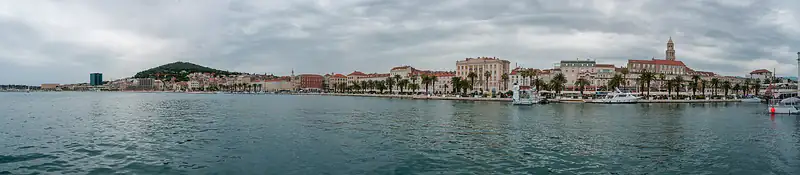
January is Split at its most local. The Riva is empty except for dog walkers. Cafés fill with residents drinking coffee slowly. Most Old Town restaurants remain open with regular hours; some in outer neighbourhoods close for two to three weeks around New Year.
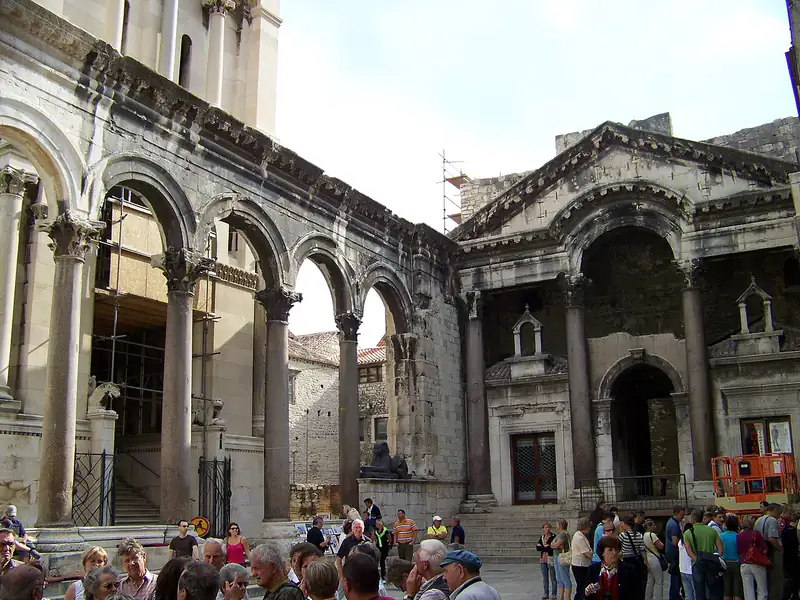
The palace in January is quiet enough to fundamentally change how you experience it. When you walk through the Peristyle without a group of forty people in front of you, you notice the architecture. The Cathedral of Saint Domnius is nearly empty. The cellars are cold and echo.
Time Walk in winter: group tours run from March to November, but the private VR tour of Diocletian's Palace runs all year. A quiet off-season palace makes the VR reconstructions of 305 AD feel even more dramatic.
Should you come in January? Yes if you want Split without tourists, understand you're not swimming, and can handle cool wet weather. Not the choice for a first visit unless you specifically want the atmosphere.
February
- Weather: average low 6°C, high 11°C, first signs of spring by late month, almond trees bloom
- Sea temperature: about 11.5°C, the coldest of the year
- Crowds: Very low
- Cruise ships: Very few
- Prices: Same as January
February brings Split Carnival (Splitski Karneval), one of Dalmatia's oldest traditions. Mid-February, the streets fill with masked processions, live music, and the ceremonial burning of Krnjeval (a straw figure blamed for the previous year's problems). If Carnival dates align with your trip, February stops feeling like a quiet month.
Days lengthen noticeably by late February. Genuine daylight until nearly 6 PM. Weather remains unpredictable: warm days reaching 15°C alternate with cold rainy stretches.
Should you come in February? Yes if Carnival dates work, or if you want the January experience with slightly more daylight.
March
- Weather: average low 8°C, high 14°C, unpredictable, some warm days
- Sea temperature: about 12°C
- Crowds: Low, first tourists appear late month
- Cruise ships: A few; numbers build from April
- Prices: Still low but starting to rise; 30 to 40% below summer
March is when Split wakes up. Winter-closed restaurants reopen. Cruise calls start to pick up. Ferry schedules to islands expand. Palace attractions run regular hours but rarely crowded.
Weather is genuinely unpredictable. Three days of 18°C sunshine can follow two days of rain and 10°C. Pack layers.
For walking tours, March is one of my favourite months. Palace stones aren't yet hot, no crowds block narrow streets, and light quality is excellent. Day trips to Trogir, Klis, and Salona become practical as opening hours extend.
Should you come in March? Yes for spring weather without summer crowds. Accept unpredictability.
April
- Weather: average low 11°C, high 17°C, real spring
- Sea temperature: about 14°C (brave swimmers begin)
- Crowds: Moderate, higher during Easter week
- Cruise ships: Building up
- Prices: Rising but 20 to 30% below peak
April is when I confidently recommend Split. Warm enough for outdoor cafés, cool enough that walking around the Old Town is comfortable. Trees are green, wisteria blooms along old streets, Marjan Hill is at its best for hiking.
Easter is significant. If Easter falls in April, book accommodation early for that week. Croatian families visit relatives; Italian holidaymakers take short breaks. Some restaurants close for family gatherings on Easter Sunday.
Cruise traffic increases substantially. On cruise days, the Peristyle can be crowded from 10 AM to 2 PM. Before 9 AM or after 3 PM, you get the palace back. This timing pattern matters throughout the entire cruise season.
Day trips work fully. Krka reopens for waterfall swimming (though water is very cold). Ferry connections to Hvar, Brač, and Vis run frequently enough for day trips.
Should you come in April? Yes. April is the beginning of Split's best travel window.
May
- Weather: average low 15°C, high 23°C, increasingly summer-like
- Sea temperature: about 17°C (swimmable for many by late month)
- Crowds: Moderate to high
- Cruise ships: Building towards the peak (January to May 2025 had 71 calls in total)
- Prices: Rising toward summer levels
May is when Split gets seriously good. Weather is beach weather. Islands are warm. Marjan Hill is green and full of wildflowers. Long evenings appear, light in the sky until nearly 9 PM by end of month.
The palace becomes busy on cruise days. If you're planning serious palace exploration, early morning (7 to 9 AM) or evening (after 6 PM) are your best windows.
Late May in particular is my favourite time in Split. Warm but not punishing. Sea swimmable. But you avoid peak-summer prices and cruise ship saturation. If you can only visit Split once and want to see it in its best form, come the last week of May.
Should you come in May? Yes, especially the second half of the month. May is arguably the single best month.
June
- Weather: average low 19°C, high 27°C, summer arrives
- Sea temperature: about 21°C (beautiful for swimming)
- Crowds: High
- Cruise ships: 37 calls in June 2025
- Prices: High, approaching peak summer
June is fully summer. Beaches fill. Boat rentals expensive. Every Riva restaurant full every night. Ultra Europe festival buildup starts late June (party crowd arriving, pre-parties).
Palace has real crowds on cruise days. Peristyle genuinely packed 10 AM to 3 PM. Cathedral tickets sell out for morning slots by 9 AM. Be there by 8 AM or after dinner for manageable experience.
Weather is beautiful but hot enough that midday walking tours (12 to 3 PM) become uncomfortable. Book a morning or late afternoon Time Walk tour.
June has the longest days of the year around summer solstice, light until nearly 9:30 PM. Sunset from Marjan Hill or the Riva at 8:45 PM is one of the most beautiful evening experiences in Split.
Should you come in June? Yes, especially the first half. Last month before Split becomes truly overwhelmed.
July
- Weather: average low 22°C, high 30°C, the hottest month, with heatwaves above 35°C
- Sea temperature: about 23°C
- Crowds: Peak
- Cruise ships: 44 calls in July 2025
- Prices: Peak (accommodation triple winter rates)
July is Split at maximum intensity. Ultra Europe takes over one weekend, bringing 150,000 electronic music fans. Cruise passengers pour into the Old Town daily. Beaches crowded 9 AM to sunset. Riva restaurants need reservations 3 days ahead.
The palace during July is a specific challenge. The Peristyle can have 500 people during cruise hours. Photographing without tourists in frame is essentially impossible 10 AM to 3 PM. Diocletian's cellars have queues.
If you must come in July, plan around crowds:
- Wake early. Palace exploration at 7 AM when cool and quiet.
- Midday at beach or on boat away from city.
- Return to Old Town after 7 PM for dinner and evening walks.
This rhythm makes July manageable and even enjoyable, but requires discipline.
Split Summer Festival runs July and August with theatre, opera, and concerts in the Peristyle and other Old Town venues. Watching classical music in a Roman courtyard on a July evening is genuinely memorable.
Should you come in July? Only if you specifically want peak summer, don't mind crowds, and have peak budget. Works but requires strategy.
August
- Weather: average low 22°C, high 30°C, as hot as July
- Sea temperature: about 24°C (peak warmth)
- Crowds: Peak
- Cruise ships: 48 calls in August 2025, the busiest month
- Prices: Peak
August is functionally identical to July with one difference. Ferragosto (August 15) is an Italian public holiday that sends huge numbers of Italian holidaymakers to Croatia. Already-busy August gets an Italian accent in the week around Ferragosto.
Croatian locals largely leave the city in August. Many locally-owned restaurants close for 2 to 3 weeks so families can vacation on the coast themselves. This affects which restaurants are open and how the city feels.
For beach lovers, August is peak. Adriatic at warmest. Sunset later than most Northern European countries have all year. Fully Mediterranean holiday atmosphere.
For history and quiet exploration, August is difficult.
Should you come in August? Same answer as July. If flexible, choose different month.
September
- Weather: average low 18°C, high 25°C, warm and comfortable
- Sea temperature: about 22°C (still lovely for swimming)
- Crowds: High early month, dropping through September
- Cruise ships: 44 calls in September 2025
- Prices: Dropping from mid-month
September is one of Split's two best months (along with late May). Weather still summer, sea warm, but intensity of July and August drops noticeably. European school holidays end after first week, families with kids leave. City becomes manageable while still feeling summer.
Early September (first two weeks) has weather nearly identical to August with slightly fewer crowds. Late September (last two weeks) still has swimming weather but real cool evenings. Light jacket at dinner. Light quality changes and becomes golden.
Cruise ships continue frequently. Palace strategy remains: early morning or evening for manageable experience.
Palace stones in September light are especially beautiful. Photographers who understand Split come in late September for the light more than any other reason.
Should you come in September? Yes. September is arguably the second-best month after May.
October
- Weather: average low 14°C, high 20°C, autumn arrives
- Sea temperature: about 19°C (swimmable but cooler)
- Crowds: Moderate, dropping through month
- Cruise ships: 47 calls in October 2025, almost as many as in August
- Prices: Dropping steadily
Early October still has summer weather most days. Water warm enough to swim. Cruise traffic stays close to its summer peak: Split had 47 cruise calls in October 2025, almost as many as in August.
Palace atmosphere in October is calmer than summer. You can walk through the Peristyle at midday without dodging tour groups. Cellars open regular hours, not crowded. Cathedral tickets easy to get.
Days shorten noticeably. By late October, sunset around 5 PM affects how much fits into daylight hours. Early morning starts become more valuable.
Late October brings first real rain days back. Storms can be dramatic. Warm sea meeting cool air produces thunderstorms visible over the water. Locals love autumn storms.
Should you come in October? Yes, especially in early October. Late October starts feeling like off-season, which is fine if that's what you want.
November
- Weather: average low 10°C, high 15°C, the rainiest month (about 9 rain days)
- Sea temperature: about 16°C (cold for most)
- Crowds: Low
- Cruise ships: 17 calls in November 2025
- Prices: Off-season rates, accommodation drops significantly
November begins Split's quiet season. Cruise calls drop sharply (17 in November 2025). Tourist crowds thin dramatically. Some restaurants and cafés reduce hours or close for winter maintenance. But the city is very much alive with locals.
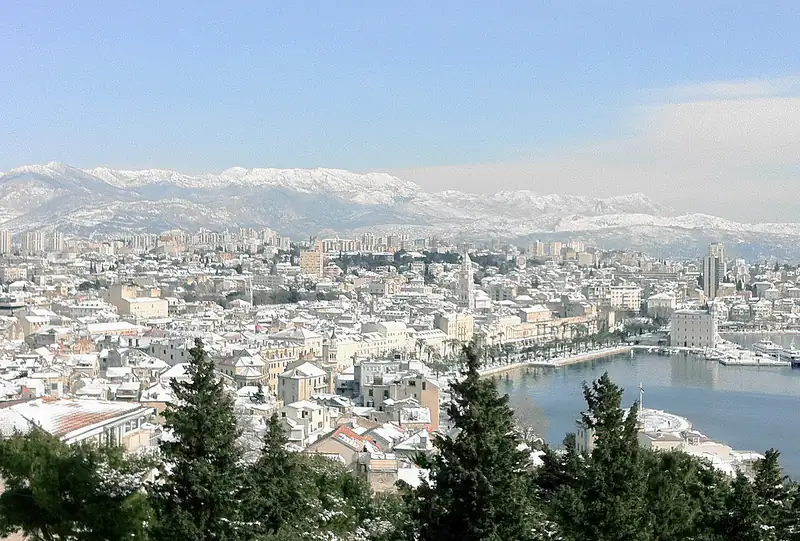
Weather unpredictable. Three days of 18°C sunshine can follow four days of rain and 12°C. Pack for both.
This is one of my favourite months for walking tours. Palace is quiet, light is soft and dramatic, and there's time to actually talk about things without being pushed along by crowds. When sun is out, temperatures pleasant for walking. When it rains, cafés cozy in a way summer never allows.
Advent u Splitu starts end of November. Split's Christmas market season begins.
Should you come in November? If you want quiet Split without crowds, yes. Accept weather variability, no swimming.
December
- Weather: average low 7°C, high 11°C, winter
- Sea temperature: about 14°C
- Crowds: Low, some domestic Advent tourism
- Cruise ships: 7 calls in December 2025
- Prices: Winter rates
Advent u Splitu (Split's Christmas market) runs late November through early January. Stalls sell mulled wine, fritule (Croatian donuts), grilled sausages, craft gifts along the Riva and Old Town. Live music on weekends. Lights decorate Roman walls.
Genuinely charming if you like Christmas markets. Smaller than famous Central European markets but full of Adriatic atmosphere. Split's mulled wine has specific style with cloves and orange peel worth experiencing.
Weather cool but rarely brutal. Snow very rare. Bura wind can make cold days feel much colder. Pack proper wind-blocking jacket even if forecast temperature seems moderate.
For palace exploration, December is quiet and atmospheric. Cathedral holds Christmas masses in Latin and Croatian worth attending even for non-religious visitors, purely for the acoustics inside a 1700-year-old space.
Should you come in December? If you want Christmas market atmosphere with Mediterranean architecture, yes. Otherwise, better months exist.
Cruise Season in Split (Critical Timing Info)
Cruise ships shape Split's daily rhythm from late spring to autumn. Official numbers from the Croatian Bureau of Statistics show 315 cruise ship calls at Split in 2025, with 37 to 48 a month from June to October, then a sharp drop to 17 in November and 7 in December. Our Split cruise port guide has the month-by-month chart.
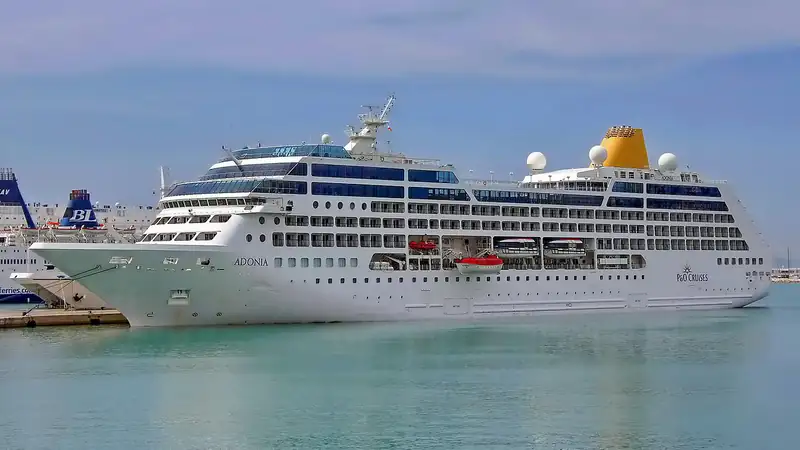
- Peak cruise months: June to October, about 9 to 11 calls a week
- Building season: April and May (January to May 2025 had 71 calls together)
- Quiet season: November to March, a handful of ships a month
On cruise days, expect palace crowds from roughly 10 AM to 3 PM. Before 9 AM and after 4 PM, the palace becomes noticeably quieter. Restaurants near the Riva and palace fill during lunch hours on cruise days.
Strategic timing: If your visit falls in cruise season, plan palace exploration for 7 to 9 AM or after 4 PM. Middle of day is for beach, boat trips, day trips out of Split, or long lunches in interior konoba streets away from the tourist route.
The Split cruise port guide covers cruise passenger logistics in detail.
Festival and Event Calendar
- February: Split Carnival (Splitski Karneval), mid-February
- March/April: Easter (moveable). Croatian family holiday, some Sunday closures
- Early July: Ultra Europe Festival. Electronic music, 150,000 attendees
- July and August: Split Summer Festival. Classical music, opera, theatre in historic venues
- August 15: Assumption Day and Ferragosto. Croatian public holiday, Italian peak
- Late October: Marunada (chestnut festival) in nearby villages
- Late November to early January: Advent u Splitu (Christmas market)
What If the Weather Turns Bad
Split summers rarely have significant rain, but weather can shift. Here's how to adapt.
Extreme heat (35°C+, several days per July and August):
- Start days at 6:00 AM
- Extend cellar and museum time (naturally cool)
- Long indoor lunch during peak heat
- Beach afternoon
- Palace exploration evening only
Rare summer rain:
- Palace has covered arcades and interior spaces
- All paid attractions are indoor
- Cellars especially atmospheric in rain
- Roman cellar wine bars become social hubs
- Klis and outdoor sites less good
- Meštrović Gallery is perfect wet-weather activity
- Krka is dramatic in rain
- Island catamarans may cancel. Check schedules.
Shoulder season rain (April, October, November):
- Expect at least 1 to 2 rain days per week
- Pack umbrella and waterproof shoes
- Palace still works as attraction
- Restaurants and cafés provide comfortable retreat
- Consider adjusting day trip plans (islands become weather-dependent)
Winter rain (November to March):
- Regular occurrence
- Split works as historic city break rain or shine
- Roman cellars, cathedral, restaurants, museums all indoor
- Cozy café culture becomes appealing
- Bura wind days can make rain feel colder than temperature suggests
Common Mistakes People Make Choosing When to Visit Split
Mistake 1: Assuming July and August is automatically best. Peak summer has peak crowds, peak prices, and palace conditions that make it harder to actually experience Diocletian's Palace. For most visitors, June or September delivers a better trip.
Mistake 2: Assuming winter Split is dead. The city has real life year-round. Restaurants, cafés, and Old Town streets remain active with locals. Palace attractions run reduced but functional hours. Winter Split rewards visitors who understand what it offers.
Mistake 3: Booking peak season without accommodation reservations. July and August accommodation books out 2 to 3 months ahead. Waiting until 2 weeks before your trip in peak season means either paying premium prices or staying in inconvenient locations 30+ minutes from the palace.
Mistake 4: Skipping shoulder season because "the weather might not be perfect." Late May, June, and September deliver very high weather quality (average daily highs of about 23 to 27°C, warm sea) with far fewer downsides than peak summer. The perceived risk of shoulder season weather is smaller than the real cost of peak season crowds.
Mistake 5: Not accounting for cruise ship schedules within your chosen month. Even in a "good" month, palace visits between 10 AM and 3 PM on cruise days feel completely different than the same palace at 7 AM or 6 PM. Structure your day around cruise arrival patterns rather than fighting them.
Mistake 6: Visiting in October and November without proper clothing. These months have genuinely variable weather. Packing only summer clothes and getting caught in an autumn rainstorm is uncomfortable and could have been avoided with 15 minutes of packing thought.
Mistake 7: Choosing month based on Instagram photos. The photos you've seen of Split were probably taken during peak season or golden hour. The city looks different at various times of year. Choose based on what experience you want, not what will match Instagram expectations.
Mistake 8: Underestimating summer heat impact on activities. Walking tours, palace exploration, and Marjan Hill hiking are much harder at 32°C than at 22°C. Peak summer requires early morning starts, midday rest, and evening resumption. Not the continuous daylong exploration schedule that works in shoulder seasons.
When Time Walk Runs Tours
Time Walk runs group walking tours through Diocletian's Palace from March to November, with several departures a day. The booking calendar shows the exact times. Private tours run all year. If it rains, you can choose a guided walk without the VR scenes, a new time or day, or a full refund.
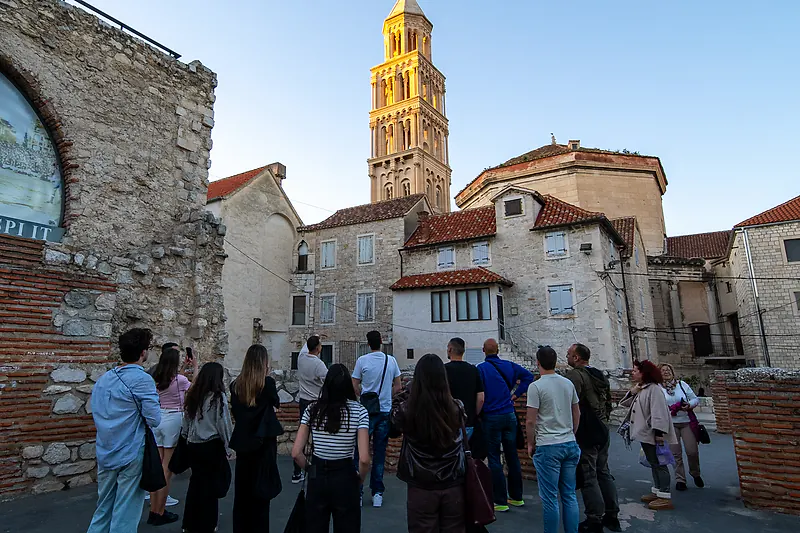
Private tours can be arranged for almost any date, including quiet winter days when you effectively have a licensed guide and Roman ruins to yourself. Private tours available in English, Italian, Spanish and French.
Best months for the tour experience specifically:
- March, April, October and November: Small groups, quiet palace, unhurried pace
- April to May, September to October: Warm weather with manageable palace crowds
- June to September morning slots: Peak season done properly. Early enough to beat cruise crowds
- June to September evening slots: Cooler temperatures, softer light, quieter palace
For visitors travelling in peak summer, an early morning tour puts you inside the palace before the majority of cruise ship tour groups arrive. A late morning tour overlaps with the cruise peak. It still works, but the palace is busier.
Frequently Asked Questions
What is the best month to visit Split, Croatia?
Late May or September are generally the best months. Warm weather, swimmable sea, most attractions open, but far fewer crowds than July and August. Prices are also 30 to 40% lower than peak summer. For visitors specifically interested in Diocletian's Palace history, April, October, and November offer the quietest palace conditions with the trade-off of no beach weather in April or November's second half.
Is Split Croatia worth visiting in winter?
Yes. Winter Split (November to March) offers the historic city without tourists, at 50 to 70% off summer accommodation rates, with a genuinely local atmosphere. The palace is nearly empty. Restaurants remain open with regular hours in most cases. Split Carnival in February and Advent u Splitu (December Christmas market) are winter highlights. Trade-offs are no swimming, reduced ferry schedules to islands, occasional closed restaurants, and unpredictable weather. History-focused travellers often prefer winter Split.
How many rainy days does Split get?
About 81 days a year with at least 1 mm of rain, on DHMZ's long-term averages for Split-Marjan. November is the wettest month (about 9 days) and July the driest (about 3 days). Summer rain usually comes as a short storm that clears within an hour or two.
Do Time Walk tours run in winter?
Group tours run from March to November. The private VR tour runs all year, in English, Italian, Spanish or French, at a time that suits you. If it rains, you can choose a guided walk without the VR scenes, a new time or day, or a full refund.
When is Split least crowded?
November through early March. Cruise ships are essentially absent, tourist crowds are minimal, and the city has a mostly local atmosphere. The palace is quiet enough that you can hear your own footsteps in the Peristyle. October and April are moderately quiet. Some tourists present but manageable. Peak crowds are July and August, with early morning (7 to 9 AM) as your only reliable quiet window during those months.
What is the hottest month in Split?
July, with an average daily high of 30.0°C, just ahead of August (29.7°C), on DHMZ's long-term averages. July averages about 16 days above 30°C, and heatwaves push above 35°C. If you're heat-sensitive, avoid these months entirely, or plan around midday shade. Early morning activities before 10 AM, indoor lunch during peak heat (12 to 4 PM), and outdoor evening activities from 6 PM onwards.
What is the cheapest time to visit Split?
November, February, and early March are cheapest. Accommodation drops 50 to 70% below summer rates. Flights significantly cheaper. Restaurants less busy so service better. Trade-off is weather (no beach) and some seasonal closures. Late shoulder months (October) also offer 20 to 30% savings without giving up all warm weather.
Can you swim in Split in May?
Yes, most swimmers can enter the sea from mid-May onwards. The sea averages about 17°C in May (DHMZ) and is warmer by the end of the month. Cool for the first 10 seconds but comfortable after adjustment. Local Croatians swim earlier (April and even March for the hardcore). By late May, general tourist swimming becomes comfortable and widespread.
Can you swim in Split in October?
Yes, especially in early October. The sea averages about 19°C in October (DHMZ), warmer at the start of the month. Still swimmable for many, notably fresh for others. In November it averages about 16°C and only committed swimmers continue.
When does cruise season start and end in Split?
Ships call in Split all year, but the busy season runs from June to October. In 2025 the port had 315 cruise calls: 71 from January to May together, then 37 in June, 44 in July, 48 in August, 44 in September, 47 in October, 17 in November and 7 in December (Croatian Bureau of Statistics). October is almost as busy as August.
Is Split crowded in June?
Yes, June is busy. Not as extreme as July and August but noticeably crowded, especially around the palace during cruise ship hours (10 AM to 3 PM). Late June approaches peak-summer intensity as Ultra Europe party crowds begin arriving. Early to mid-June is manageable with morning-focused schedules.
What is the best month for beaches in Split?
July and August have the warmest water (about 23 to 24°C on the long-term average) and warmest weather. Beaches are also most crowded then. For a balance of good beach weather and fewer crowds, aim for early June or September. The sea is about 21 to 22°C, weather warm, but crowds meaningfully lower than peak summer.
Do I need to book accommodation in advance for Split?
July and August: 2 to 3 months ahead for good options at reasonable prices. May, June, September: 1 to 2 months ahead recommended. April, October: 3 to 4 weeks ahead usually sufficient. November to March: 1 to 2 weeks ahead is fine except during Carnival (February) and Advent (December weekends).
What is the weather like in Split in April?
April averages a daily high of about 17°C and a low of about 11°C, with warmer spells. Rain is possible but not frequent (about 8 days with rain on average). The sea is about 14°C, cold for most swimmers. Real spring weather, wisteria blooming, Marjan Hill green and pleasant for hiking. Easter (moveable) can make one specific week busier.
Is it warm in Split in October?
Yes, mostly. October's average daily high is about 20°C (DHMZ), warmer at the start of the month and cooler at the end. Evenings become noticeably cool by mid-month. The sea averages about 19°C. Great for walking and sightseeing; borderline for swimming by late October.
When does snow fall in Split?
Snow in Split is rare. Happens once or twice per winter, usually briefly, rarely accumulates. When it does snow, the city stops in a charming way because nobody is used to it. Bura wind (strong cold northeast wind) is much more common than snow and can make cold days feel much colder.
What is Advent in Split?
Advent u Splitu is Split's annual Christmas market. Runs late November through early January. Stalls on the Riva and Old Town streets sell mulled wine, Croatian holiday foods (fritule, grilled sausages), and craft gifts. Live music happens on weekends. Lights decorate Roman walls. Smaller than famous European Christmas markets (Vienna, Prague) but distinctive Adriatic atmosphere.
When is Split Carnival?
Split Carnival (Splitski Karneval) happens in February, usually the week leading up to Ash Wednesday. Exact dates vary year to year based on Easter calendar. Parades and masked processions in the Old Town. Culminates with ceremonial burning of Krnjeval (straw figure). One of Dalmatia's oldest traditions and worth planning around if February dates work.
Are all Split attractions open year-round?
Most major attractions open year-round with reduced winter hours:
- Diocletian's Palace itself: Always accessible (living neighbourhood, not gated museum)
- Cathedral of Saint Domnius: Year-round, reduced winter hours
- Bell tower: Year-round, reduced winter hours (may close during weather)
- Cellars: Year-round
- Temple of Jupiter: Year-round
- Krka National Park: Year-round, reduced services November to March
- Islands: Year-round but reduced ferry schedules in winter
Is Split worth visiting for just a day?
Yes. Even a single day gives you the palace, the Riva, historic streets, and lunch at a local restaurant. Enough to fall in love with Split. Not enough to fully explore, but plenty to know if you want to come back for longer. See Split cruise port guide for single-day planning tactics, or best things to do in Split for a compressed itinerary.
How many days do you need for Split?
Three days is the ideal for most travellers. One day for the palace and Old Town, one for a day trip (Trogir, Klis, Salona, Krka, or an island), and one for beach and Marjan Hill or a second day trip. Two days is workable but rushed. Four days lets you add an overnight island stay. Our 3 days in Split itinerary covers this in detail.
When is Croatian Independence Day and does it affect Split?
Croatian Independence Day is October 8. It's a public holiday so some businesses close, but the city otherwise operates normally. Not a major disruption for visitors. Statehood Day (May 30) is a similar situation. Public holiday with some closures.
Do I need to worry about jellyfish in Split waters?
Jellyfish appear periodically in Adriatic waters. Most commonly late summer (August, September). Not consistently present. When they do appear, local news and beach flags warn swimmers. Stings are usually mild. No need to plan travel around jellyfish concerns.
What's the best month for photography in Split?
May, September, and October for light quality. Golden hour is longer and more dramatic in shoulder seasons than in peak summer's harsh midday light. Sunset colours are particularly good in October when weather turns from summer stability to autumn variability. For architecture photography, early morning in any season works better than midday.
Should I visit Split in the low season if I don't speak Croatian?
Yes. Split is a fully tourism-oriented city year-round. English is widely spoken in restaurants, hotels, and tourist services. Winter locals in cafés may switch to Croatian conversations more than in summer when everyone's ear is tuned to English, but service in English is universal. Italian and German also widely spoken by tourism staff.
Is the sea warmer in Split or in the Croatian islands?
Very similar. Split's sea temperature closely tracks nearby islands (Brač, Šolta, Hvar). Difference is usually 0.5 to 1°C at most. Islands may feel warmer psychologically because there's less industrial coastline than in Split port area, but actual temperatures are essentially the same in nearby waters.